

Key takeaways
- Either party must give written notice at least 90 days before the contract expires to change any term — including rent. Miss this window and the existing terms carry over automatically.
- Rent increases are capped by the RERA Rental Index. Your landlord cannot raise rent outside what the index allows, regardless of what the new contract says.
- Ejari must be renewed for every new contract period. An unregistered renewal has no legal standing in a dispute.
- Online Ejari renewal through the Dubai REST app costs around AED 177–178. In-person renewal at a trustee centre costs around AED 215–220.
- If your landlord wants to reclaim the property or make major changes, they must issue a notarised 12-month eviction notice — not just a 90-day one.
The 90-day notice rule
Dubai Law No. 26 of 2007 requires both landlord and tenant to give at least 90 days' written notice before contract expiry if either party wants to change any terms or end the tenancy. That window applies to rent increases, changes to payment structures, and non-renewal alike.
If neither party sends notice in time, the contract automatically renews for another year under the same terms. This works in your favour if the rent is fair, but it also means your landlord cannot raise rent mid-cycle after missing the deadline.
Start the conversation with your landlord two to three months before expiry. That gives you time to negotiate, check the index, and get paperwork in order without rushing.
How to check if a proposed rent increase is legal

Before agreeing to any new figure, run the numbers against the RERA Rental Calculator. The calculator uses the current Smart Rental Index to show the maximum permissible increase for your unit type, location, and current rent. If your landlord's proposed figure exceeds the index ceiling, they cannot legally enforce it.
The allowed increase ranges from 0% to 20%, depending on how far your current rent sits below the market rate for comparable units. A 2-bedroom apartment in JVC currently renting at AED 75,000, for example, may see zero increase if it's already at or above the index midpoint.
If you believe a proposed increase is unlawful, you can file a complaint with the RERA Dispute Settlement Centre before signing anything.
Step-by-step: renewing your contract
Step 1 — Agree on terms
Confirm the rent, duration, and payment structure with your landlord or their agent. If you're considering switching from cheques to monthly payments, this is the right moment to raise it — some landlords are open to it, and services that allow paying rent monthly in Dubai have made the conversation easier.
Step 2 — Sign the unified tenancy contract
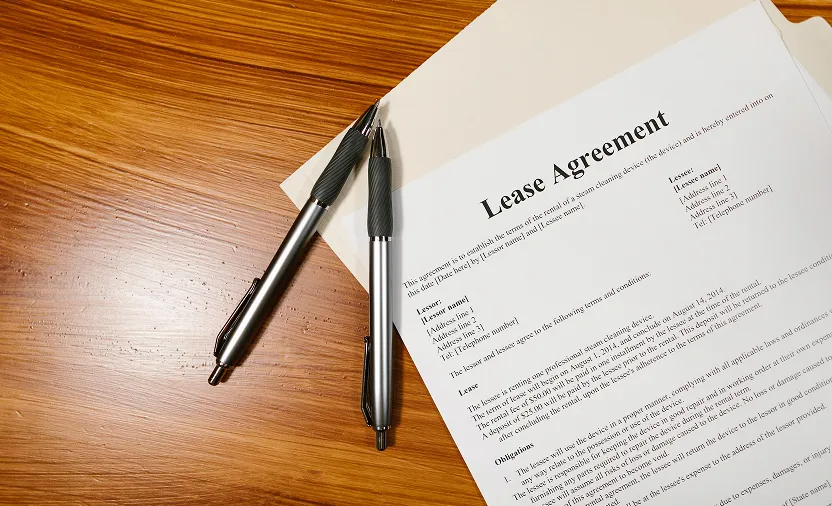
Use the standard Unified Tenancy Contract template. Both parties sign. If you're using an agent or typing centre, they'll prepare this for you. Make sure the contract reflects the agreed terms exactly before signing — disputes almost always come down to what the contract says versus what was discussed verbally.
Step 3 — Renew your Ejari registration
This is mandatory. Your previous Ejari certificate covers only the prior contract period. The new contract must be registered separately to have legal standing — without it, you can't connect DEWA, get a trade licence at the address, or rely on the contract in a rental dispute in Dubai.
- Online renewal (fastest): Open the Dubai REST app, log in with UAE Pass, go to RERA/Ejari services and select Renewal. Upload your documents, pay the fee, and receive the e-certificate by email — often the same day.
- In-person renewal: Visit an authorised Real Estate Trustee Centre. Useful if you're missing a document or prefer to have someone walk you through it.
Step 4 — Update DEWA and other utilities
Once you have the new Ejari certificate, update your DEWA account with the new contract details. Most utility transfers in Dubai require a valid Ejari, so do this promptly after renewal.
Documents you'll need
- Signed Unified Tenancy Contract (new period)
- Tenant's Emirates ID
- Passport copy and visa page (tenant; sometimes landlord too)
- Previous Ejari certificate
- Property details — title deed reference or DEWA premise number
- Power of Attorney if someone is acting on your behalf
Requirements vary slightly by channel. Check the Dubai REST app for the exact list before you go in person.
Renewal fees
| Channel | Approximate Fee |
|---|---|
| Online (Dubai REST / DLD) | AED 177–178 |
| Trustee Centre (In-person) | AED 215–220 |
The difference covers the higher service partner fee at trustee centres. Agent fees, if applicable, are charged separately.
What happens if your landlord won't renew
A landlord cannot simply refuse to renew without legal grounds. Under Dubai tenancy law, valid reasons for a landlord refusing to renew the contract are limited — personal use of the property, sale to a buyer requiring vacant possession, or planned demolition or major renovation. In each case, the landlord must serve a notarised 12-month notice. A 90-day notice alone is not enough to end the tenancy against a tenant's will.
FAQs
What happens if I miss the 90-day notice deadline in Dubai?
If neither party sends written notice 90 days before the contract expires, the tenancy renews automatically on the same terms for another year. Your landlord cannot introduce a rent increase or new conditions mid-cycle after missing the deadline.
Can my landlord increase rent every year in Dubai?
Not automatically. Any increase must comply with the RERA Rental Index, and the landlord must give at least 90 days' written notice before the contract expires. If your current rent is already at or above the index rate for your unit, the permitted increase is 0%.
Do I need to renew Ejari even if the landlord and tenant are the same?
Yes. Ejari registration is required for every new contract period, regardless of whether the parties remain the same. Skipping it leaves you without legal protection and blocks access to services like DEWA registration and trade licences tied to the address.
Check what the RERA Rental Index says about your unit before you agree to anything. Once you've signed, that figure becomes the baseline for every renewal after it.