


Key takeaways
- Rent increases in Dubai follow the RERA Smart Rental Index, and landlords must give at least 90 days' written notice before a contract expires.
- Ejari registration is mandatory for every unit, and an unregistered contract cannot be enforced at the Rental Dispute Centre.
- Security deposits are typically 5% of annual rent for unfurnished units and 10% for furnished ones.
- Portfolios managed through one property management platform tend to see shorter vacancy periods than those tracked on scattered spreadsheets.
- Property management support, including Keyper's, usually becomes worthwhile once a landlord holds three or more units, or lives outside the UAE.
The legal rules that apply to every unit in your portfolio
Ejari registration keeps every contract enforceable
Dubai's rental system runs on Law No. 26 of 2007, amended by Law No. 33 of 2008. Every contract in your portfolio must be registered through Ejari before it holds any legal weight. Landlords carry the main responsibility, even though tenants often submit the paperwork.
Rent increases follow the RERA Smart Rental Index
Decree No. 43 of 2013 caps rent increases against the RERA Smart Rental Index. The allowed rise depends on how far current rent sits below market rate. A landlord raising rent across several properties should check the Dubai rent increase law for each unit. Buildings often sit at different points on the index.
Notice must reach the tenant at least 90 days before expiry, or the term rolls over unchanged.
Eviction rules are tighter than most landlords expect
During an active contract, grounds are limited to cases such as non-payment after 30 days' notice or unauthorised subletting. At renewal, a landlord wanting a unit back for personal use, sale or renovation generally owes 12 months' written notice. The full process is set out in the eviction notice guide.

Self-management, a traditional agent or Keyper
When self-management still works
A landlord with one or two nearby units can often self-manage without much strain. Add a third property, or move overseas, and the maths changes fast. Missed renewal dates and slow maintenance replies soon cost more than any management fee would.
Where a traditional agent falls short
Traditional agents bring local networks and leasing speed. Their service usually stops once the tenant has signed, and rent collection, inspections and renewals fall back into your hands.
How Keyper's property management services close the gap
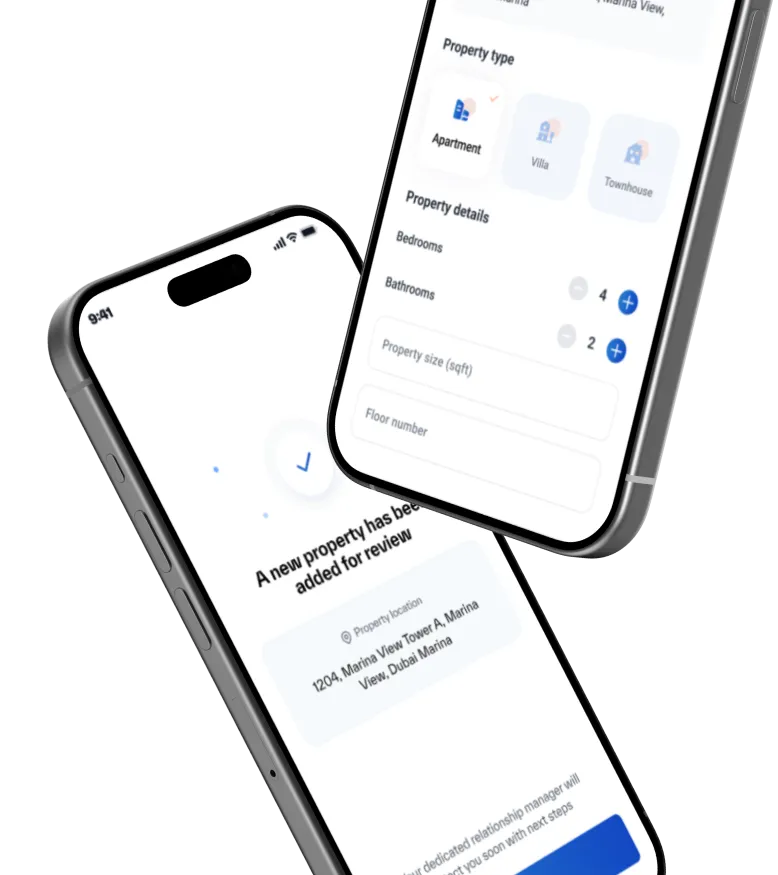
Keyper's property management services work differently. One dashboard covers every unit. A landlord with flats in JVC, Business Bay and Al Barsha can check occupancy and maintenance tickets in one place.
Keyper handles tenant screening, leasing, Ejari support and inspections under one account. This closes the coordination gap a traditional agent leaves open.
Comparing the cost
Traditional property management typically charges 5–8% of gross annual rent. Meanwhile, Keyper leans toward flat, on-demand pricing, which is AED 11 per rented day and zero charges for vacant days.
Landlords can also cash out upcoming rent early through the rent now, pay monthly structure. That gives multi-unit landlords steadier cash flow.
How Keyper keeps vacancy low across a growing portfolio

Vacancy is the biggest threat to portfolio returns, and it compounds fast. One empty flat for a few weeks is manageable. Three empty flats in the same month, across a ten-unit portfolio, can wipe out a quarter's profit.
Faster relisting when a unit sits empty
Keyper's screening and listing tools push a vacant unit back onto the market within days, not weeks. They use tenant demand data alongside each property's pricing history.
The platform flags a unit sitting empty longer than expected. This pattern is covered in why your property is sitting empty longer than expected. It then prompts the landlord to adjust price or marketing.
Screening that prevents vacancy before it starts
Keyper checks income, employment and rental history against every application. This reduces the defaults and early move-outs that force a unit back onto the market. Landlords running one screening standard across every property see steadier occupancy.
Running day-to-day operations without the chaos
Standardise every process
A portfolio only stays manageable if every unit follows the same process. Standardise lease templates, move-in checklists and inspection routines. No property should become a special case that only you remember how to handle.
Centralise your data
Keyper's property management software tracks lease dates, renewal windows, payment history and maintenance logs in one account. This replaces the spreadsheet juggling that trips up landlords once a portfolio passes three or four properties. Automated reminders for the 90-day rent notice and Ejari renewals stop deadlines slipping through.
Keep up with preventive maintenance
Preventive maintenance, especially AC servicing, protects tenant satisfaction and property value. Keyper coordinates a vetted contractor network across every unit. A landlord based abroad does not need to source a plumber for a midnight leak in JVC.
Consistent maintenance also supports faster rent collection, since tenants who trust a landlord pay on time more often.
Tracking net yield and portfolio performance
Net yield versus gross rent
Gross rent tells you little on its own. Net yield is the number that shows whether a portfolio is working. It comes after subtracting service charges, maintenance and vacancy days.
Large buildings with heavy amenities often carry high service charges. That cost is worth reviewing in the guide to service charges in Dubai.
Portfolio-wide visibility
Keyper's dashboard surfaces real-time yield, occupancy and valuation data for every property. A landlord can compare a two-bedroom in Dubai Marina against a studio in Business Bay without building a spreadsheet. That visibility makes it easier to spot underperforming units, worth reviewing against the Smart Rental Index.
Jointly owned buildings and Mollak rules
For jointly owned buildings, common-area budgets fall under Mollak rules and Law No. 6 of 2019. Trust accounts and RERA oversight apply. Keep this separate from your own accounting. Doing so on the same platform as the rest of the portfolio keeps year-end reporting simpler.
FAQs
How many rental units justify hiring a property manager in Dubai?
Most landlords find professional management pays for itself around three units, or sooner if they live outside the UAE. Below that, self-management with a good tracking system often works fine.
What is the biggest compliance risk for multi-unit landlords in Dubai?
Missing the 90-day rent increase notice window is the most common mistake. It forces the existing rent to renew unchanged for another full year.
Does Keyper manage properties across different areas of Dubai under one account?
Yes. Keyper's dashboard supports multi-property management under a single account. It covers leasing, rent collection, maintenance and reporting, whichever community each unit sits in.
Dubai rewards landlords who treat compliance and vacancy control as routine, not afterthoughts. A portfolio built on standard processes, tracked deadlines and dependable rent collection tends to outperform one run on memory alone. For landlords ready to bring several units under one system, Keyper's property management services offer a practical starting point.